I Fell in Love With a Dog Sold Under a Breed Name I No Longer Trust
The title is probably the simplest way to explain why this series exists and why it will continue for a while. So, let’s begin with how I got here.
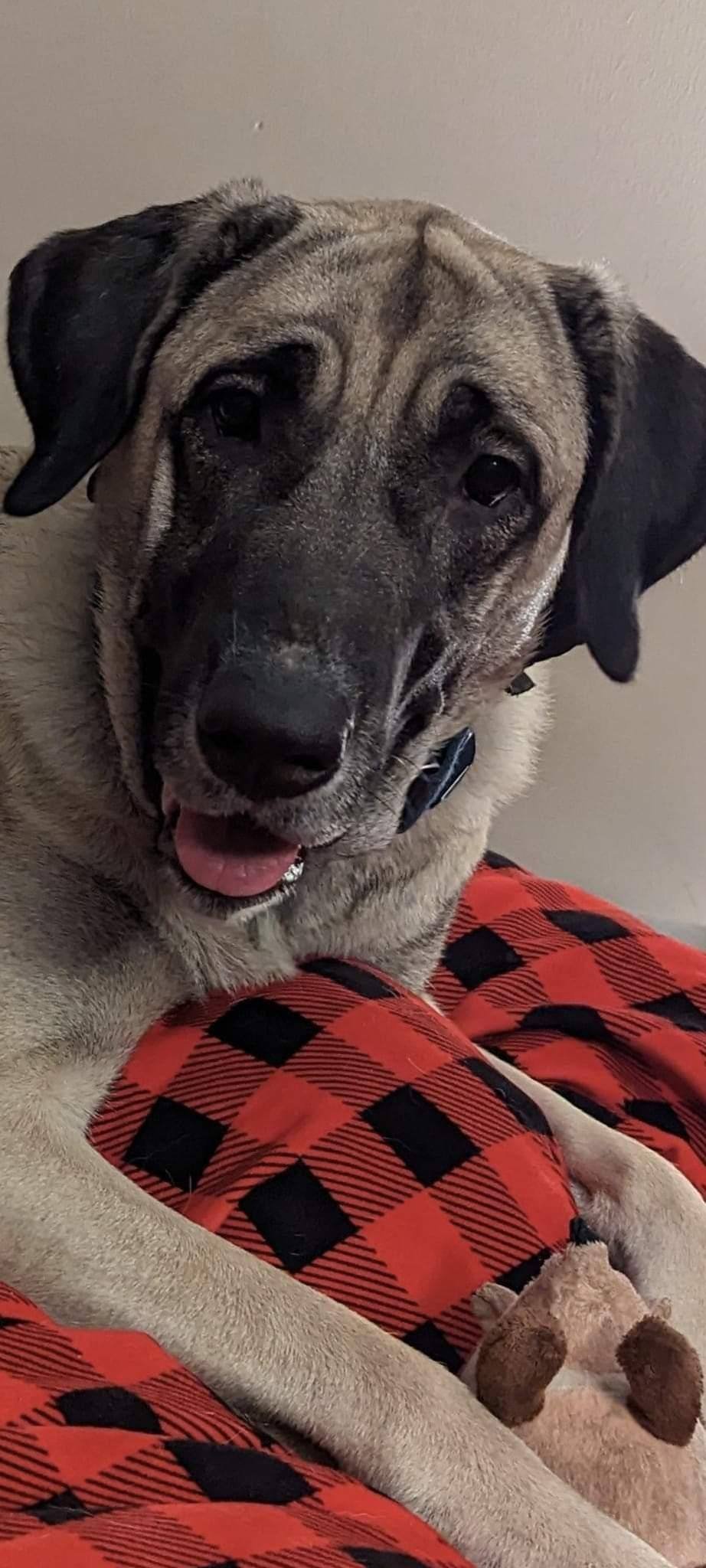
Five years ago, in February, my wife and daughter bought me a Turkish Boz Shepherd for my upcoming birthday. I had lost my beloved dog the year before, and this puppy looked so much like her, just much larger.
I named that puppy Freyja.
She was supposed to become my new best friend. She did, but she also taught me more than I ever expected. More than anyone probably would have believed, including me.
At first, I did what most people do. I read the breed pages. I watched the videos. I absorbed the hype. Ancient landrace. Legendary guardian. Rare Turkish dog. Massive power. All the usual language that gets repeated until it starts to sound like fact.
The history, though, did not add up.
The more I looked, the less the history matched the hype. Once I got past the marketing, the Turkish Boz Shepherd did not seem to match the story being sold.
That led me beyond the Boz and into Turkey’s dog history in general.
There is a lot there. And honestly, it is fascinating.
So What Is a Turkish Boz Shepherd?
That depends on who you ask.
The modern Turkish Boz Shepherd is often promoted as an ancient livestock guardian tied to the Yörük people and the mountains of southern Turkey. That is the story most people find first.
But the more I researched, the less cleanly that story held together.
What I came to understand is that many dogs sold under the Boz name appear to sit somewhere between established Turkish livestock guardian types, especially the Kangal, or Kangal Çoban Köpeği, and heavier mastiff type dogs such as the Malaklı Karabaş, also known as the Aksaray Malaklısı.
The selling point seems simple enough. Take the traits that make the Kangal such a respected livestock guardian, then add the size and raw physical power associated with the Malaklı.
On paper, that sounds impressive.
In real life, things are rarely that clean.
Then There Is the Anatolian Shepherd
To make it even more complicated, we have the Anatolian Shepherd Dog, a breed recognized by the AKC in the United States.
Its American registry history is far more recent than the ancient language commonly attached to the name. The Anatolian Shepherd Dog entered the AKC Miscellaneous Class in 1996 and received full recognition in the Working Group in 1999. The AKC’s own history also describes Turkish livestock guardian dogs arriving in the United States in several waves, beginning in the late 1930s and continuing through the 1970s.1
That history matters.
It does not describe one clearly defined Turkish breed arriving all at once under a name already established and recognized in Turkey. Instead, the American population developed from Turkish livestock guardian dogs imported over several decades.
It is entirely possible that dogs of Kangal type were among those imports. However, the records cited here do not prove that every Anatolian is a Kangal or that every Anatolian is a deliberate Kangal mix.
That is why I think the Anatolian Shepherd name has often functioned as a Western registry bucket for Turkish livestock guardian dogs.
That does not mean every Turkish shepherd dog is a Kangal.
It does not mean every large Turkish guardian dog is descended from the Kangal.
And it definitely does not mean the AKC name reflects how Turkey itself organizes, names, preserves, or protects its native breeds.
That is a whole different story.
And that story matters.
Recognition Is Not Always What People Think It Is
One of the things that makes this topic messy is that people throw around the word “recognized” as though it means one thing.
It does not.
The Turkish Dog Federation recognizes the Boz. It says it officially recognizes Turkish shepherds including Akbash, Anatolian, Boz, Kangal, Karadeniz, and Malakli.2
It also says it was established in 2021 and lists its head office as USA.3
That matters.
But it is not the same thing as saying the country of Turkey treats the Boz, or the Anatolian Shepherd, the same way it treats its documented native breeds.
KIF, the Köpek Irkları ve Kinoloji Federasyonu, is Turkey’s FCI member kennel federation. On its visible native breed page, KIF lists Kangal Çoban Köpeği, Akbaş Çoban Köpeği, and Zerdeva. Neither the Boz nor the Anatolian Shepherd is listed there.4
KIF’s own About page discusses its work to register Turkey’s native dog breeds through standards recognized by the FCI. It specifically names Kangal Çoban Köpeği, Akbaş, Zerdava, Aksaray Malaklısı, Sultan Tazısı, and others.5
Again, that is not the same thing as the Turkish Dog Federation’s private recognition system.
Turkey’s Ministry of Agriculture and Forestry export guidance also lists certain protected native dog breeds whose exit from the country is subject to prior permission because they are treated as protected genetic resources.
The listed dogs are Kangal Çoban Köpeği, Akbaş Çoban Köpeği, Kars Çoban Köpeği, Çatal Burun Av Köpeği, and Zağar İnci Köpeği. Neither the Boz nor the Anatolian Shepherd is on that list.6
That does not prove that no dogs of the Boz type exist.
It does not prove that every dog sold as a Boz is worthless, fake, or bad.
It does not erase the dogs themselves.
Freyja was not fake.
Freyja was real. Freyja was loved. Freyja changed my life.
But loving the dog does not mean I have to keep defending the story she was sold under.
Why I Am Writing This
This series is my attempt to untangle some of it.
Not because I hate Boz dogs.
I loved one, deeply.
Freyja is the reason I started learning. She is also the reason I eventually had to admit that loving the dog did not mean defending the label.
After Freyja passed, I realized I did not want to keep repeating things just because I had once believed them.
I did not want to help sell the myth.
I wanted to understand the dogs, the history, the paperwork, the money, and the difference between real preservation and good marketing.
That search eventually led me to the Kangal.
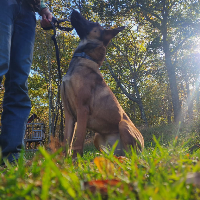
And now I own Nyx.
Where This Series Is Going
This series will not be perfect, and I do not pretend to be the final authority on Turkish dogs.
But I am going to follow the facts where they lead.
We are going to talk about the Kangal Çoban Köpeği, the Akbaş Çoban Köpeği, the Aksaray Malaklısı, the Karabaş name, the Anatolian Shepherd, and the Turkish Boz Shepherd.
We are going to talk about registries, breed names, private paperwork, landrace claims, breeder marketing, and the uncomfortable truth that dogs are often sold under stories that benefit humans more than the dogs themselves.
I do not have a breeder network.
I do not have multiple websites built around selling one version of the story.
I do not have deep pockets behind me.
What I do have is one dog who taught me where to start, another dog who made me care enough to keep going, and a pretty low tolerance for people profiting from confusion.
So, let’s start there.
And for the record, I am American. I am not of Turkish descent. I do not pretend to own their history, their breeds, or their preservation work.
But I do respect it.
And when a country is trying to preserve a breed like the Kangal, I think the least the rest of us can do is stop muddying the water for profit.
Sources and Further Reading
- American Kennel Club. “Anatolian Shepherd Dog History: From Livestock Guardian and Protector to Loyal Companion.” Anatolian Shepherd Dog Club of America. “About ASDCA.” ↩︎
- Turkish Dog Federation Inc. “Turkish Dog Federation.” ↩︎
- Turkish Dog Federation Inc. Site information stating its year of establishment and head office location. ↩︎
- Köpek Irkları ve Kinoloji Federasyonu. “Yerli Irklar.” ↩︎
- Köpek Irkları ve Kinoloji Federasyonu. “Hakkımızda.” ↩︎
- Republic of Türkiye Ministry of Agriculture and Forestry. “Kedi ve Köpeklerin Yurt Dışına Yolcu Beraberi ve Ticari Sevklerine İlişkin Uygulama Talimatı.” ↩︎